Unitree Robotics · the machine that fought first
G1
Child-sized, cheap enough to crash and agile enough to headline — the most widely used humanoid in combat events anywhere, from Hangzhou to San Francisco.
- Height
- 130 cm
- Weight
- ≈35 kg
- Joints
- 23–43 DOF
- Knee torque
- 90 N·m
- First bout
- May 2025
- Base price
- ≈$13,500
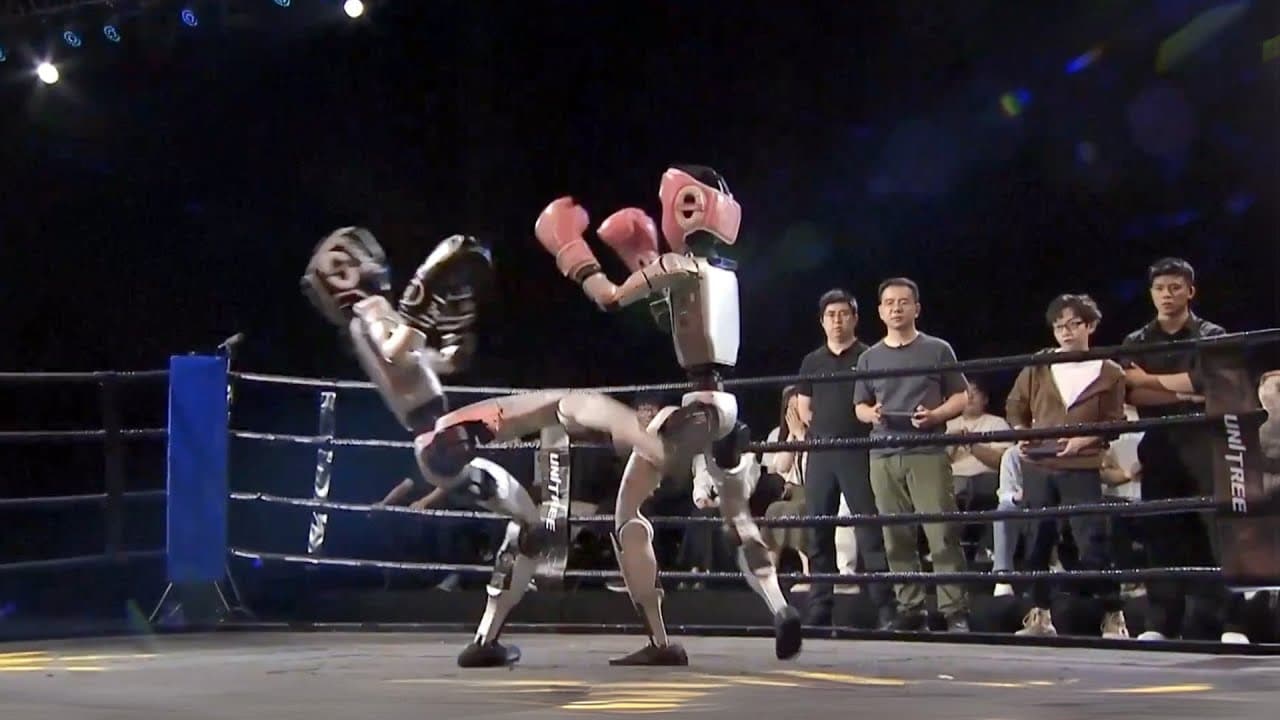
Front
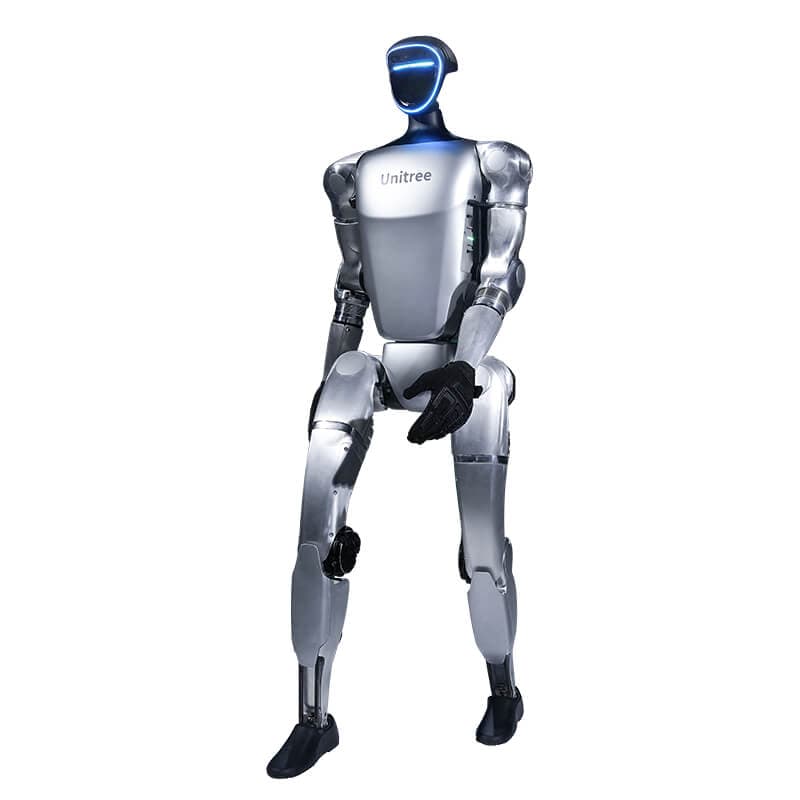
- 1Illuminated face strip — depth-sensing head module
- 2Torso battery and compute — trained by imitation and reinforcement learning
- 3Gloved hands — padded for fight trim; dexterous options up to 43 DOF total
- 490 N·m knees — enough for hooks, side kicks and getting back up
- 5Compact feet — 2 m/s walking, stable on one leg mid-kick
Photo: Unitree Robotics.
In action
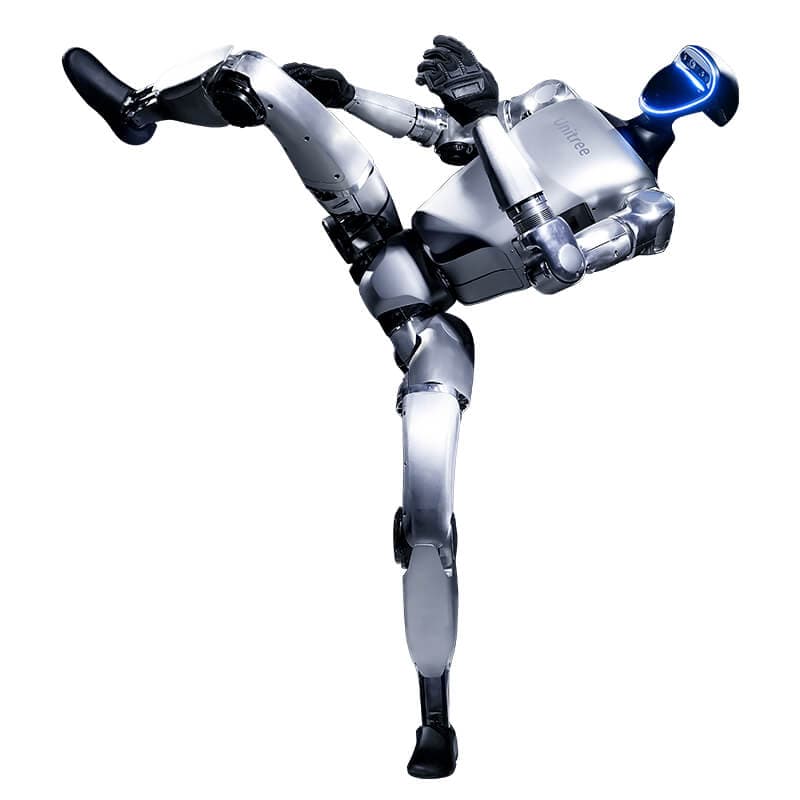
Photo: Unitree Robotics.
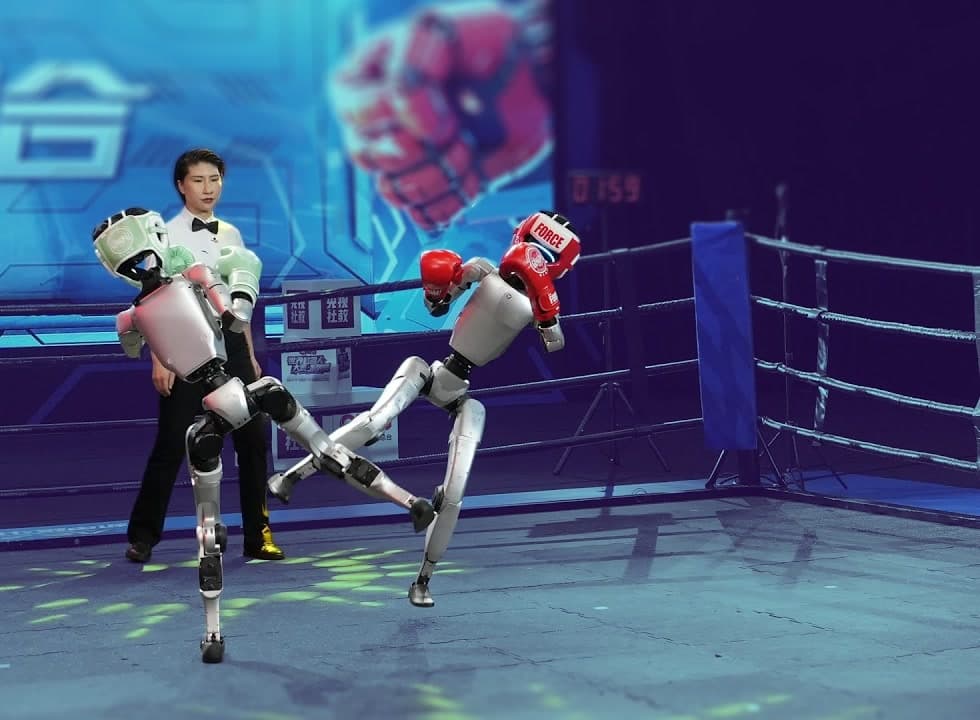
Iron Fist King · Hangzhou
May 2025 — the first robot boxing tournament ever held. Four G1s, human operators, and the night this sport started.
Photo: Iron Fist King broadcast.
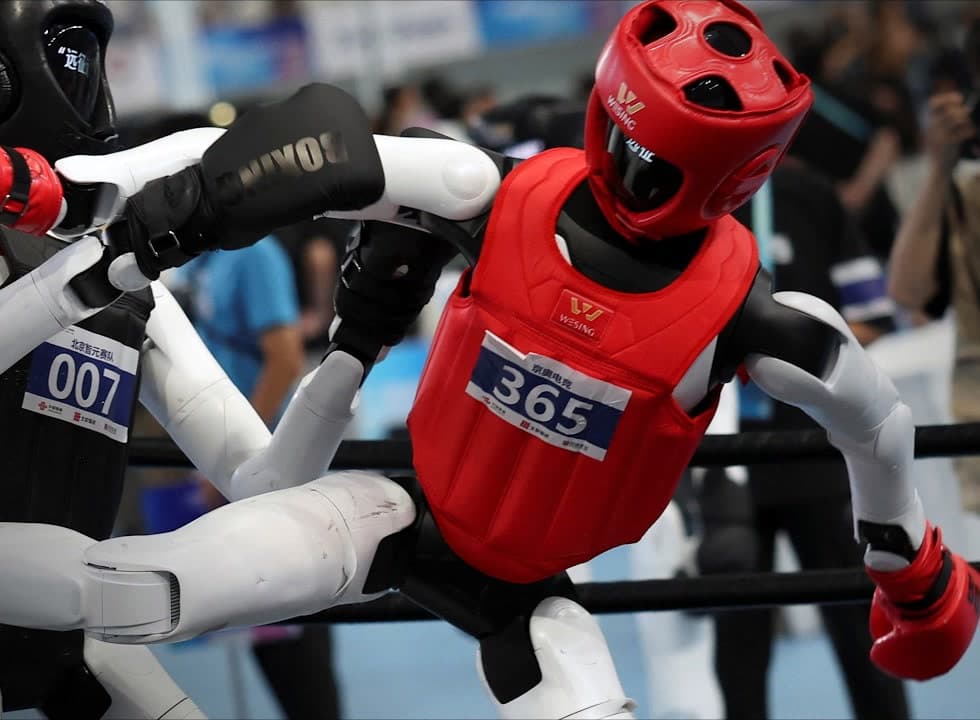
WHRG kickboxing · Beijing
August 2026 — the kickboxing bracket of the World Humanoid Robot Games, fought in full contact gear with team numbers on the vest.
Photo: World Humanoid Robot Games broadcast.
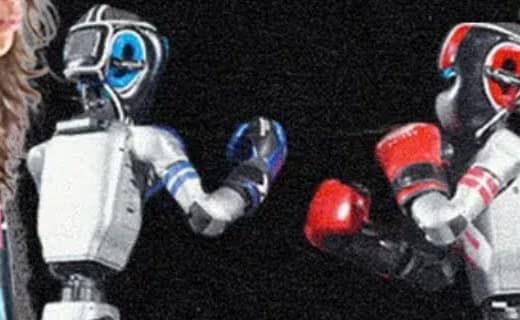
REK · San Francisco
The first robot fighting on US soil — modified G1s under VR control, piloted by professional MMA fighters.
Photo: REK.
About this machine
The G1 is the machine that fought the first robot boxing match in history — Iron Fist King: Awakening, Hangzhou, May 2025 — and it is still the most widely used humanoid in combat events anywhere. At 1.3 metres and roughly 35 kilograms it is child-sized next to a T800, which is exactly why it got there first: it is cheap enough to field in numbers, light enough to crash without consequence, and agile enough to be genuinely fun to watch.
The standard machine runs 23 degrees of freedom, expandable to 43 with the dexterous-hand options, with up to 90 newton-metres of knee joint torque. That is enough for hooks, side kicks, spinning strikes and — the capability audiences actually came for — getting back up off the floor unassisted. Its control stack is trained by imitation and reinforcement learning.
Its combat record spans three formats: Unitree's own Iron Fist King tournaments in Hangzhou, the kickboxing bracket of the World Humanoid Robot Games in Beijing, and REK's fights in San Francisco — the first robot fighting on US soil — where the machines are modified G1s fought under VR control. When you see a small humanoid throw a hook anywhere in the world, it is almost certainly this platform.
At a reported price around $13,500 for the base configuration, the G1 is the accessible end of this sport — several university teams' entire combat programmes run on it. Unitree followed it with the larger H-series, but as of this season the G1 remains the platform every smaller-format fight card is built on.
Fight history
No bouts fought yet
Every completed bout will appear here, newest first, with a link to the event it was on.