EngineAI · standard platform of URKL and CyberHero
T800
The only fighting machine built at the size of an adult human. Every URKL and CyberHero bout is two of these — identical hardware, different software, different armour.
- Height
- 173 cm
- Weight
- 75 kg
- Body joints
- 29 DOF
- Peak torque
- 450 N·m
- Top speed
- 3 m/s
- Battery
- 72 V quick-release
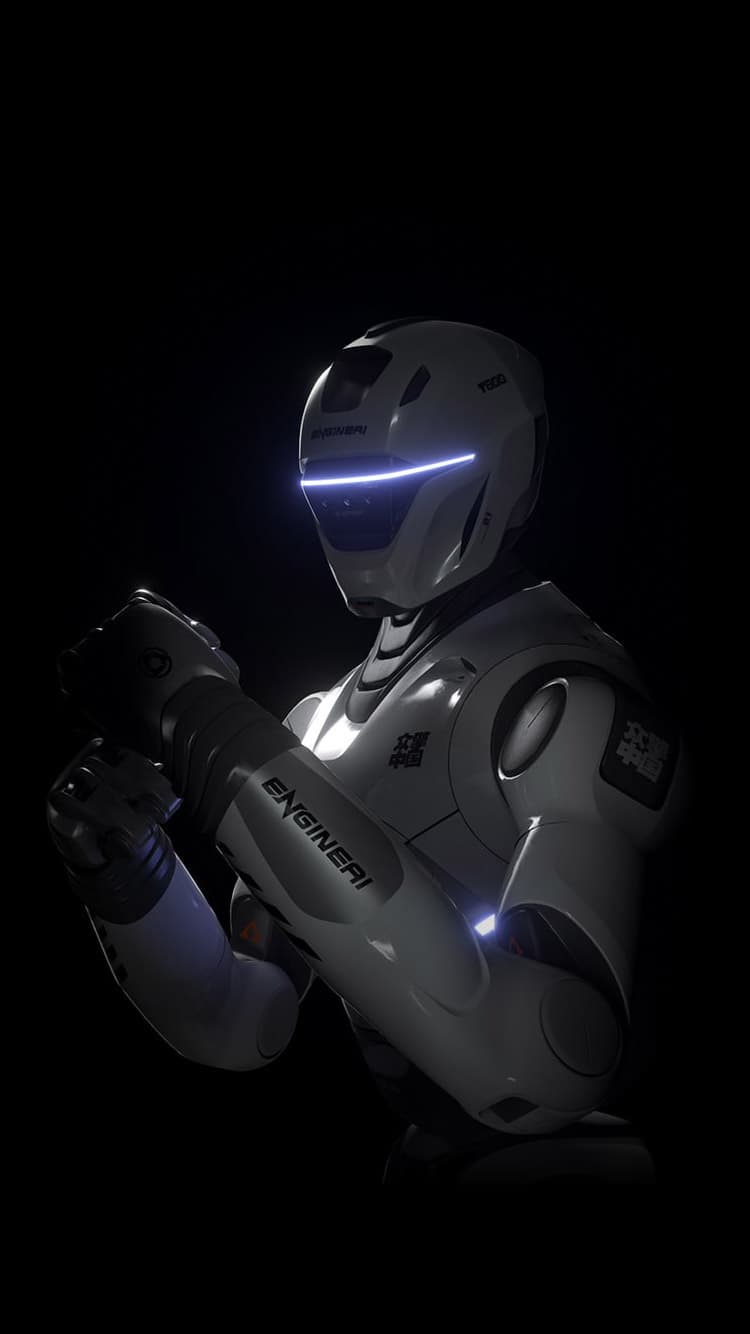
Front
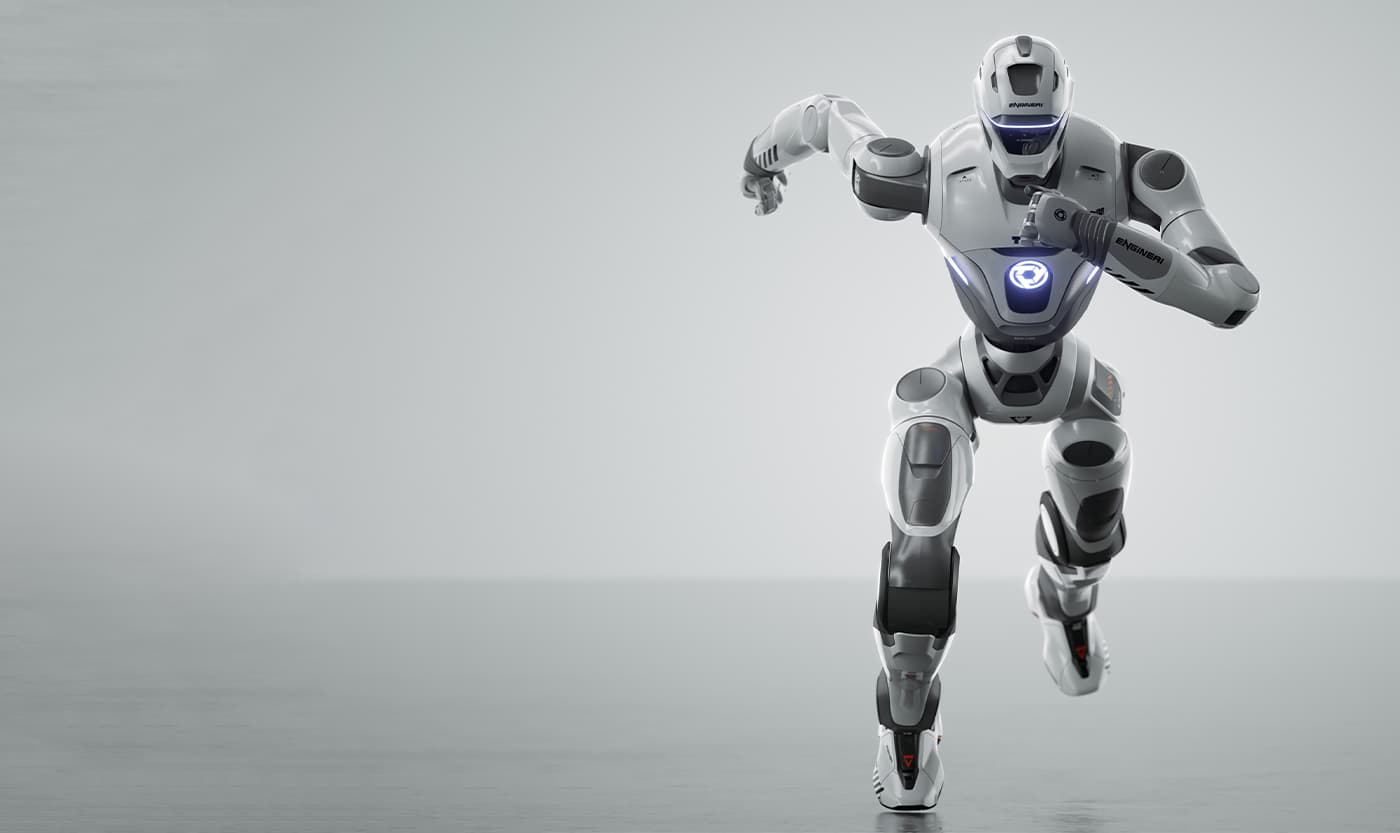
- 1Impact-resistant helmet — automotive-grade light strip, 2-DOF neck
- 2Visual perception sensors — AI camera array behind the visor
- 3Chest sensor core — second perception module and microphone
- 47-DOF hands — five-fingered, fully articulated
- 51-DOF waist — the pivot behind spinning techniques
- 66-DOF legs — active-cooled joints, 450 N·m peak
- 7Bionic noise-reducing feet
Photo: EngineAI.
Back
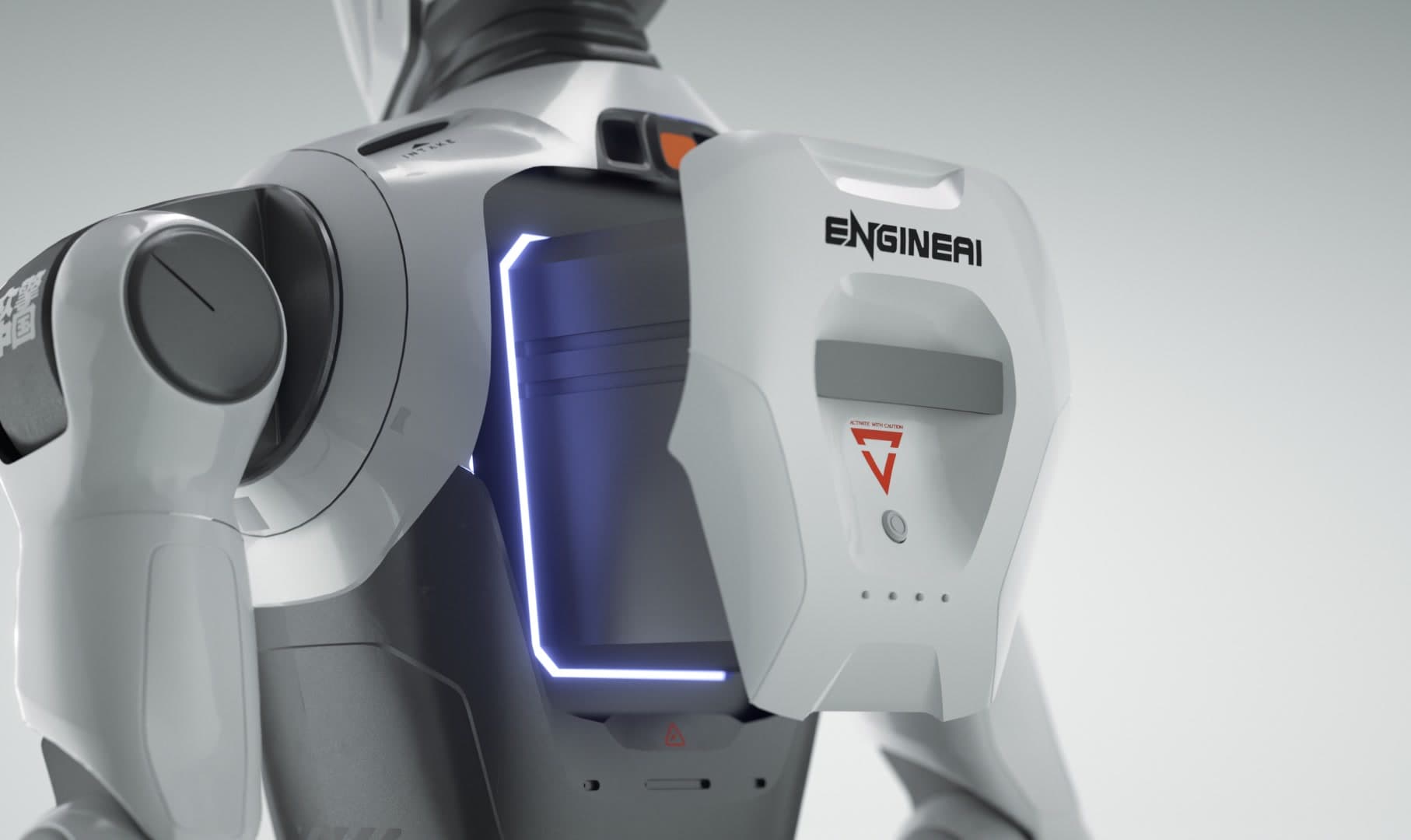
- 1Cooling intake — active airflow for the drivetrain
- 2Removable fast-charging battery — 72 V quick-release pack
- 3Status light strip
- 47-DOF arms — shoulder, elbow and wrist articulation
- 5Magnesium-aluminium alloy body — aviation-grade panelling
Photo: EngineAI.

Hands that close into fists
Seven degrees of freedom per hand — five fingers that grip, block and punch. In fight trim they wear padded gloves.
Photo: EngineAI.
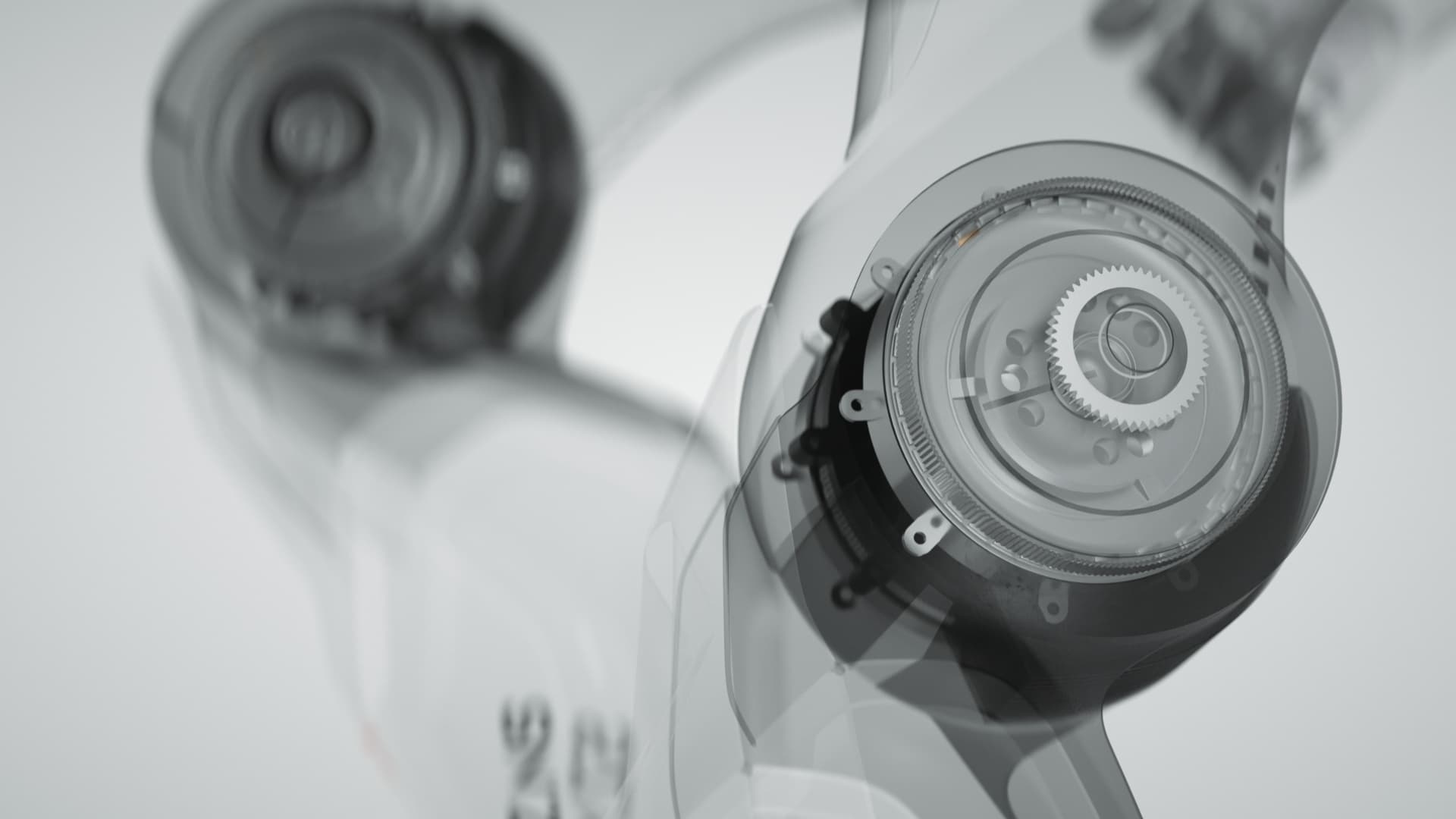
450 N·m in every strike
The joint actuators peak at 450 newton-metres — the torque budget behind flying kicks, 360° aerials and fast recovery off the floor.
Photo: EngineAI.
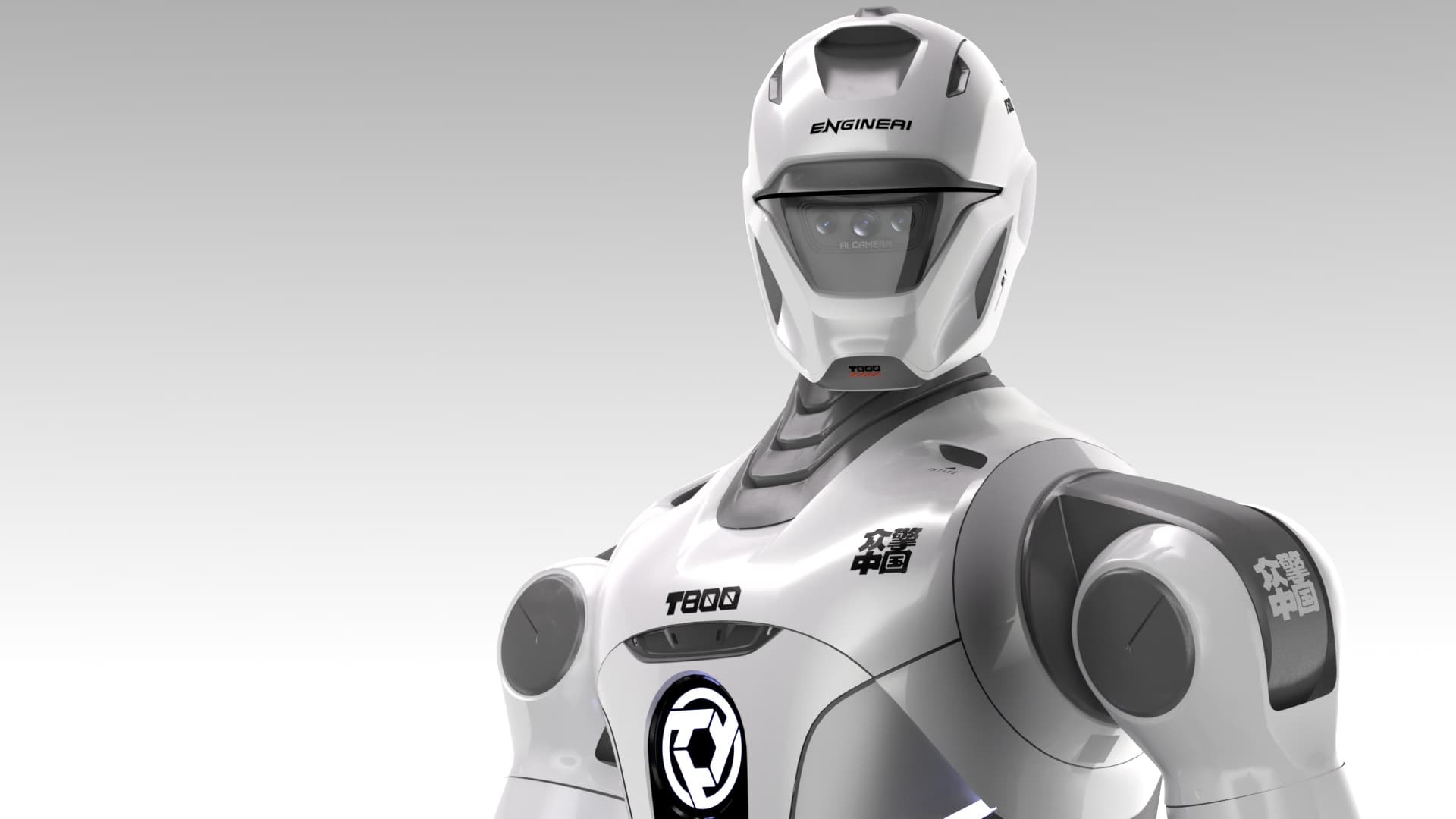
Eyes behind the visor
A depth-camera array reads the opponent while the operator calls intent — the machine itself owns balance, footwork and execution.
Photo: EngineAI.
About this machine
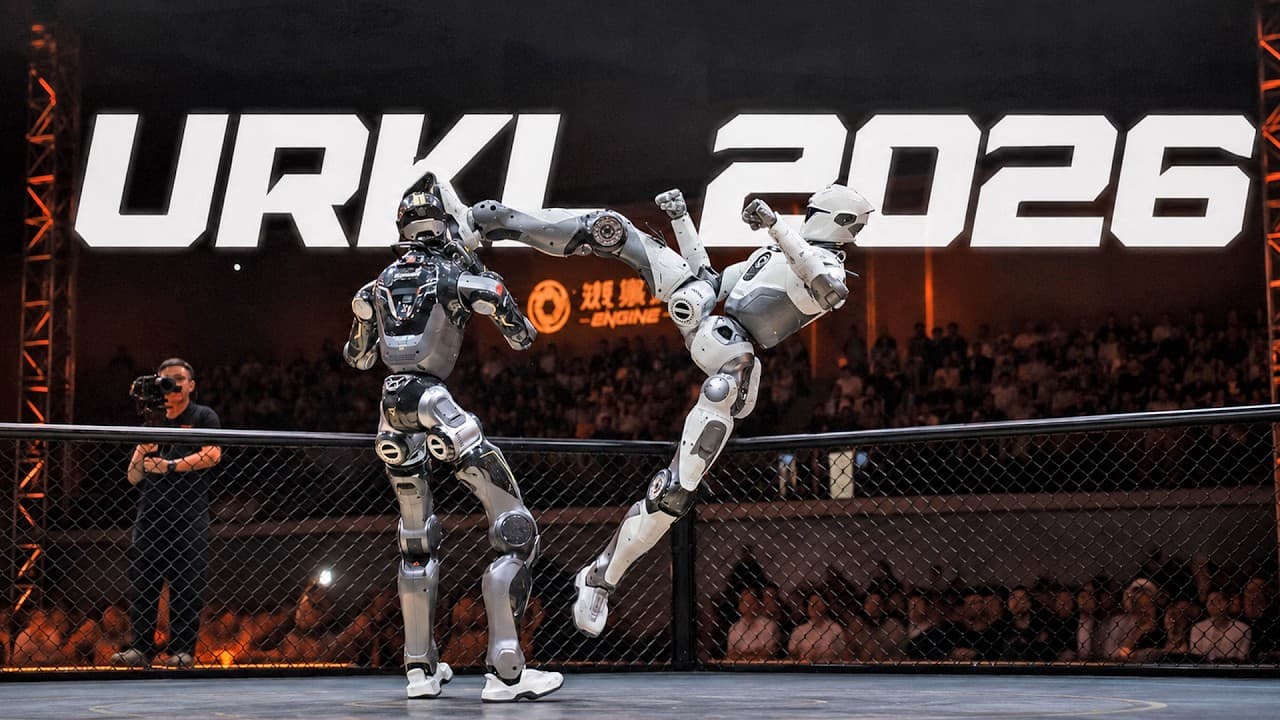
The T800 is the reason most of this sport looks the way it does. EngineAI unveiled it in February 2026 as a full-size fighting platform — 1.73 metres and 75 kilograms with battery, which makes it the only machine in combat use that is genuinely the size of an adult human. URKL and CyberHero both run entire cards on it, in identical trim, so every difference you see in the cage is software, operator and armour colour, never hardware.
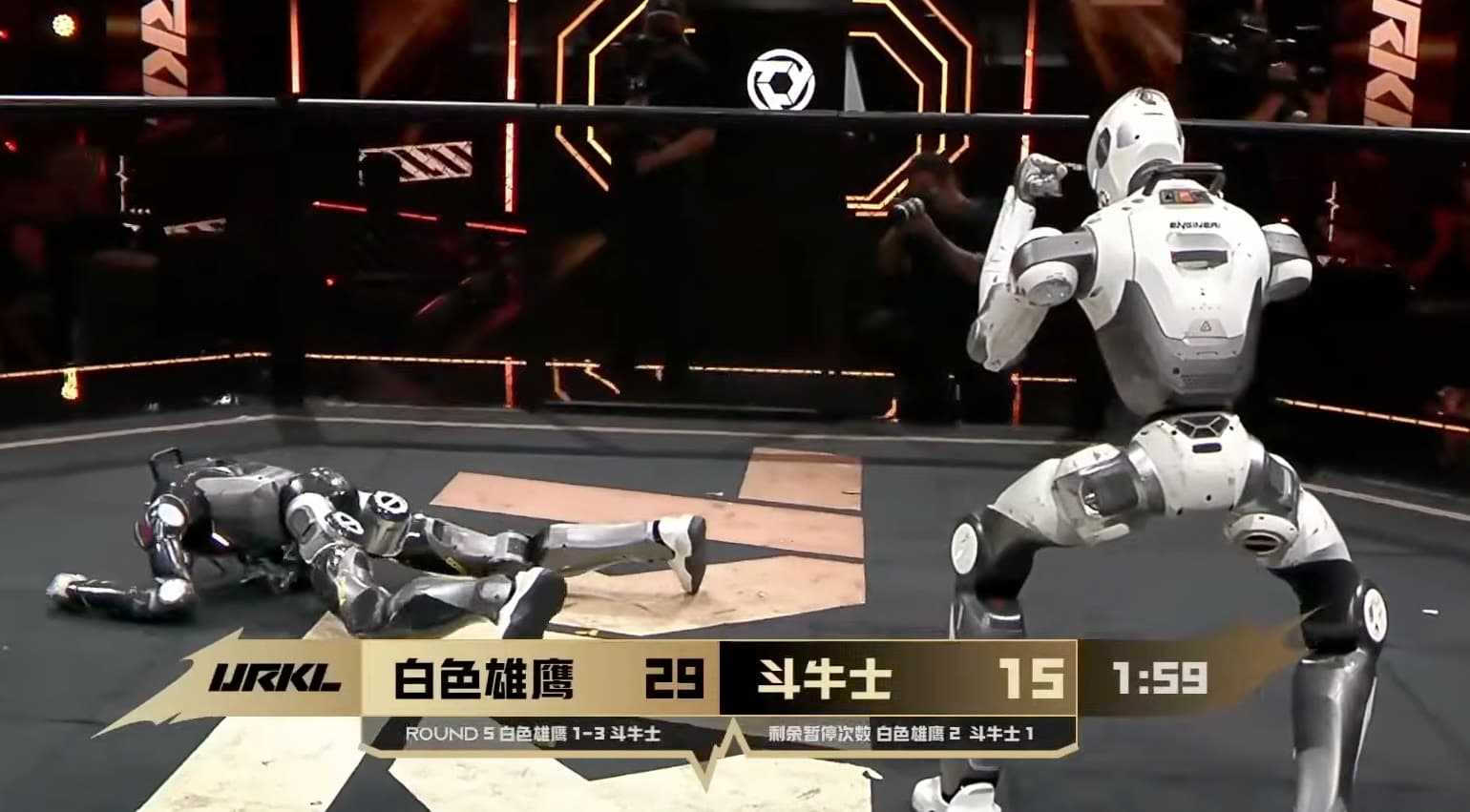
The body carries 29 articulated joints with 450 newton-metres of peak joint torque — enough for uppercuts, spinning kicks, 360-degree aerial rotations and, critically, getting back up at speed after a knockdown. The shell is aviation-grade aluminium panelling. An active cooling system in the leg joints keeps it in high-intensity operation for hours rather than minutes, on a quick-release 72-volt battery.
It sees with a depth-camera array plus LiDAR and radar coverage, and in URKL configuration it fights as a shared-control machine: the operator gives high-level intent from a handheld remote — where to stand, when to advance, which technique to trigger — while onboard systems own balance, stabilisation and the actual execution of the movement. That split is what let a headless machine keep fighting in Shenzhen: losing the head module costs the primary vision hardware, not the torso's ability to balance and strike.
EngineAI supplies the machines to competing teams rather than selling them into the league. Public pricing reports have ranged from about $25,000 pre-order to $40,000. The company also sells the FA01 fighting armour as a separate accessory and encourages teams to develop their own protection — which is where the sport's visual identity, White Eagle's white plate against Matador's dark carbon, comes from.
In the cage as
Fight history
No bouts fought yet
Every completed bout will appear here, newest first, with a link to the event it was on.